
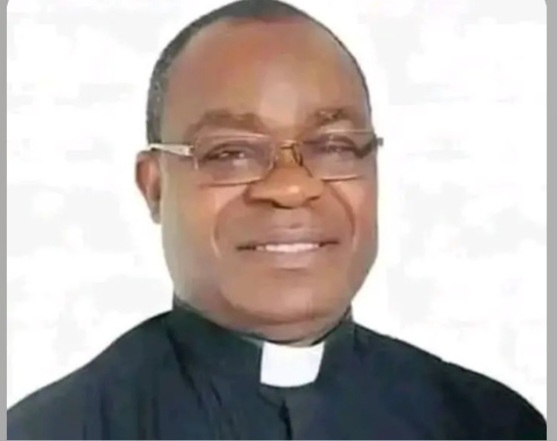

Reverend Father Cornelius Omonokhua has identified the Boko Haram insurgency, disagreements over the 2014 National Conference and tensions between the Catholic Church and the Christian Association of Nigeria (CAN) as some of the factors that contributed to the suspension of activities of the Nigeria Inter-Religious Council (NIREC) between 2013 and 2018.
Omonokhua disclosed this during an interview with African Independent Television (AIT), where he recounted the disagreements between Christian and Muslim leaders that reportedly weakened the council during a period of heightened insecurity and religious tension in the country.
NIREC, which is co-chaired by the Sultan of Sokoto and the President of CAN, was established to promote dialogue, peaceful coexistence and mutual understanding between Christians and Muslims in Nigeria.
According to Omonokhua, one of the major sources of tension within the council was the Boko Haram insurgency, which generated disagreements over the perceived responsibility of Muslim leaders in addressing the violence.
He explained that some Christian leaders believed that Muslim authorities, particularly the Sultan of Sokoto, could play a more decisive role in bringing the insurgency to an end.
Omonokhua recalled a meeting in Uyo, Akwa Ibom State, where the then CAN President, Pastor Ayo Oritsejafor, reportedly confronted the Sultan over the activities of Boko Haram.
Recounting the exchange, the cleric said Oritsejafor challenged the Sultan directly, insisting that he had the capacity to stop the insurgents.
According to Omonokhua, the Sultan responded by pointing out that Muslims were also victims of Boko Haram attacks.
The response, he explained, underscored the fact that the insurgency was affecting Nigerians across religious lines and was not limited to one faith community.
Omonokhua identified disagreements over the 2014 National Conference as another factor that strained relations between Christian and Muslim representatives within NIREC.
He said the council’s coordinator at the time reportedly described the conference as being contrary to Muslim interests, a position that further deepened divisions among members.
The cleric also cited tensions between the Catholic Church and CAN as another challenge to interfaith cooperation.
According to him, the Catholic Church accused CAN of engaging in partisan activities and subsequently withdrew from the Christian organisation, adding to the difficulties confronting religious collaboration.
These disagreements, Omonokhua explained, contributed to the challenges that prevented NIREC from functioning effectively during the period under review.
The council plays an important role in promoting understanding between Nigeria’s two major religious communities, particularly amid recurring security challenges, religious disagreements and concerns about national unity.
Omonokhua’s account highlights how differences over security, political developments and religious representation can undermine institutions established to foster peaceful coexistence.
He also underscored the importance of dialogue, mutual respect and shared responsibility in resolving disagreements and strengthening relations among Nigeria’s religious communities.
