
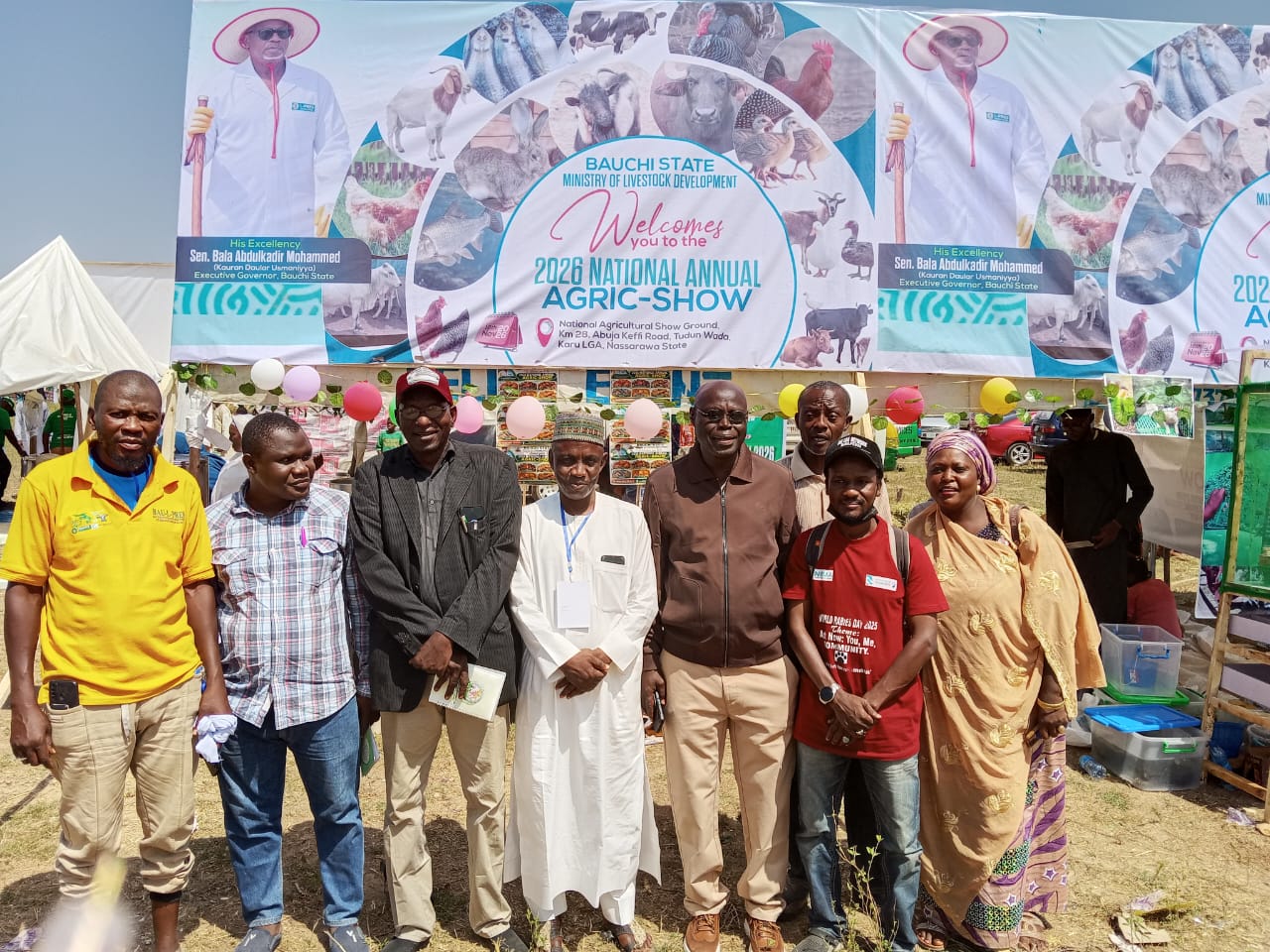
Bauchi unveils new dairy, livestock feed technologies to tackle farmers-herders crisis, boost food security

By Samuel Torlumun at the trade fair grounds
In what could represent a significant shift in Nigeria’s livestock production system, the Bauchi State Government has unveiled innovative dairy processing and livestock feed production technologies aimed at increasing milk production, reducing the cost of animal feeds and addressing the lingering farmers-herders crisis through modern livestock management
The innovations, which were showcased at this year’s National Agricultural Show, demonstrate the state’s determination to move away from traditional livestock production practices towards a more productive, commercially viable and sustainable agricultural system.
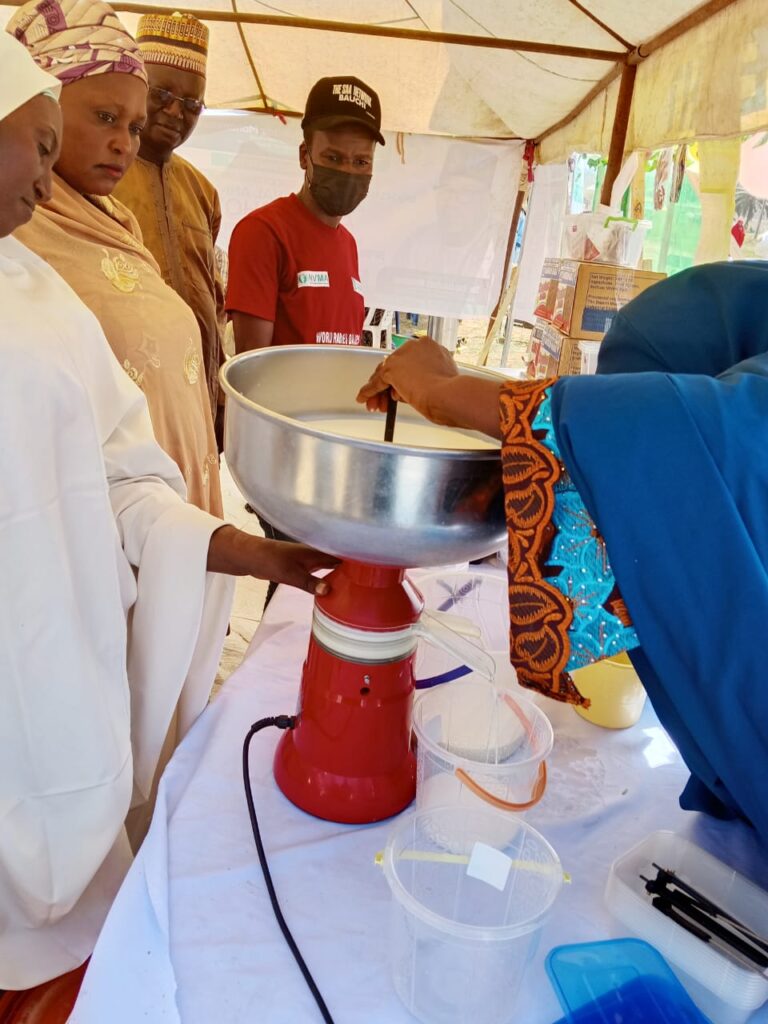
At the centre of the initiative are a milk skimming machine, a milk churner and an alternative livestock feed production technology involving the Black Soldier Fly, which converts agricultural waste and by-products into protein-rich animal feed.
The technologies are expected to improve livestock productivity, reduce dependence on conventional feed ingredients, encourage ranch-based cattle management and ultimately reduce the frequent clashes between farmers and herders arising from competition over land, water and grazing resources.
This year’s National Agricultural Show, themed “Building a Resilient Nigeria Agrifood System: Empowering Farmers, Mobilizing Investments and Driving Innovation for Food Security and Shared Prosperity,” provided an opportunity for Bauchi State to demonstrate how innovation and strategic government investment could transform livestock production and strengthen Nigeria’s food security architecture.
One of the major attractions at the Bauchi State pavilion was its modern milk processing facility, featuring a milk skimming machine designed to separate fat from fresh milk during processing.
The facility also incorporates a milk churner, a specialised container or machine used for collecting, storing and processing milk. Traditionally, milk churns were large metal containers used by dairy farmers to transport fresh milk from farms to processing centres. The modern technology, however, offers improved opportunities for milk handling, processing and preservation.
Dr. Abdulkadir Umar, representative of the Bauchi State livestock development initiative explained that the technology was being introduced to farmers to encourage a more efficient approach to dairy production.
According to Umar, adopting modern milk processing equipment would significantly improve the economic value of livestock farming while enabling farmers to produce more milk with fewer cattle.
He noted that the innovation challenges the traditional belief that livestock farmers must maintain large herds to achieve substantial milk production.
“With this technology, even a small number of cattle can give you much milk. Instead of keeping about 100 cows, you can keep 50 or even fewer. With good management, a cow can produce between 30 and 50 litres of milk daily,” he said.
He explained that the introduction of improved crossbred cattle, supported by proper animal nutrition and effective management practices, would enable farmers to maximise milk production without necessarily expanding the size of their herds.
He identified crossbreeding, improved pasture development and modern milk processing as critical components of the state’s emerging livestock value chain.
According to him, the state has already embarked on pasture development, with some of the grasses planted barely three months earlier having been harvested.
The development, he said, demonstrates the potential of locally cultivated livestock feed to support intensive cattle production and reduce the dependence of herders on open grazing.
He argued that the combination of improved cattle breeds, adequate pasture, modern processing equipment and better livestock management could fundamentally change the economics of cattle production in Nigeria.
More importantly, the innovation is being presented as a practical response to the persistent conflict between farmers and herders, which has continued to threaten rural livelihoods, agricultural investments and national food production.
For decades, competition over grazing land and water resources has contributed to violent confrontations between pastoralists and crop farmers in different parts of the country. However, the emerging livestock production model seeks to address some of the underlying causes by encouraging farmers to keep fewer but more productive animals in controlled environments.
Under this arrangement, cattle would no longer need to move long distances in search of pasture, as farmers would be encouraged to establish sustainable feed production systems and manage their animals in designated locations.
“The emphasis will no longer be on open grazing, but on keeping cattle in one place. It is not about the quantity of cows, but having a few quality animals that can produce more than a large number of ordinary cattle,” the representative explained.
He therefore called on the Federal Government, particularly the Ministry of Livestock Development, to support the initiative by providing milk skimming machines and other essential equipment to livestock farmers.
He maintained that government intervention in the procurement of the equipment would encourage more pastoralists to embrace modern dairy farming, improve their incomes and reduce the economic incentive for the movement of cattle from one location to another.
BLACK SOLDIER FLY: A NEW ANSWER TO LIVESTOCK FEED CHALLENGES
Beyond dairy production, another major innovation showcased by Bauchi State at the agricultural exhibition was an alternative livestock feed production system using the Black Soldier Fly.
Livestock feed has remained one of the biggest challenges confronting animal farmers across Africa. The high cost and scarcity of conventional feed ingredients have continued to undermine livestock production, increase the cost of animal products and discourage investment in the sector.
In many communities, the search for pasture and other animal feed resources has also contributed to tensions between crop farmers and pastoralists.
Recognising the importance of addressing this challenge, Bauchi State is exploring alternative and sustainable methods of producing livestock feed through the cultivation and processing of Black Soldier Fly larvae.
The Black Soldier Fly is a harmless insect whose larvae can convert organic waste and agricultural by-products into nutrient-rich materials suitable for animal feed production.
Unlike conventional feed production systems that depend heavily on expensive ingredients such as soybean meal and fishmeal, the technology offers an opportunity to produce affordable protein sources from readily available organic materials.
According to the explanation provided at the exhibition, the larvae contain approximately 43 per cent protein, making them a potentially valuable ingredient in the formulation of animal feeds.
The larvae can be fed fresh or dried and processed for use in poultry production, including chickens and turkeys, as well as small and large ruminants.
The technology also has additional environmental and agricultural benefits, as the processing of organic waste produces useful by-products that can be applied in agricultural production, including bio-digestate and materials for biogas generation.
Explaining the production process, a representative at the exhibition said the Black Soldier Fly undergoes a continuous biological life cycle involving eggs, larvae, pre-pupae, pupae and adult flies.
The adult flies reproduce by laying eggs, which hatch into larvae. The larvae feed on organic materials, grow into pre-pupae and subsequently develop into pupae before emerging as adult flies to continue the cycle.
He explained that the production process could be established on a relatively small scale, including at the back of a farmer’s residence, provided the necessary environmental and management conditions were available.
According to him, Bauchi State’s climatic conditions provide a favourable environment for breeding the insects and developing the technology into a sustainable livestock feed enterprise.
He further explained that a female Black Soldier Fly could lay as many as 900 eggs, providing considerable potential for multiplication and commercial production.
The technology, he said, could help farmers overcome the persistent challenge of sourcing affordable protein ingredients for livestock feed while reducing production costs.
Beyond its economic benefits, the system also provides an opportunity to turn agricultural waste into valuable resources, thereby promoting environmental sustainability and supporting a circular agricultural economy.
The presentation also highlighted Azolla pinnata as another potential alternative in livestock feed production, although it is a separate aquatic plant-based feed resource from the Black Soldier Fly technology.
The adoption of such alternative feed resources could help farmers diversify their feed options, reduce production costs and improve the nutritional quality of livestock diets.
BAUCHI’S LIVESTOCK DEVELOPMENT STRATEGY
Speaking on the strategy for ensuring that livestock farmers benefit from the new technologies, the Director of the Bauchi State Ministry of Livestock Development, Aliyu Zubairu Usman, said the state government was committed to transforming livestock production through deliberate policies, farmer mobilisation and capacity development.
He attributed the progress being recorded to the political will of Governor Bala Abdulkadir Mohammed and the support of the state Commissioner for Livestock Development.
According to him, the government has approved the establishment of pilot projects across the state to ensure that livestock farmers are organised into productive clusters along different agricultural value chains.
“We wrote to His Excellency that we wanted to cluster our farmers into value chains. He gave us approval, and we have conducted the clustering of farmers across the different value chains,” he said.
Usman disclosed that the state had commenced the implementation of the pilot programme in Bauchi North Senatorial District, with plans to extend it to Bauchi South before concluding the exercise in Bauchi Central.
He explained that the clustering arrangement was designed to bring livestock farmers together, identify their specific production needs and expose them to modern methods of animal husbandry, feed production, dairy processing and other commercially viable livestock activities.
The initiative, he said, would also make it easier for the government and development partners to provide technical support, training, equipment and other interventions to organised groups of farmers.
He added that the state government was looking forward to attracting more development partners and investors willing to collaborate in piloting and expanding the new technologies.
For the ministry, the ultimate objective is to ensure that livestock farmers are not merely introduced to modern equipment but are adequately trained to operate, maintain and maximise the economic benefits of the technologies.
HEALTHY LIVESTOCK, COMPETITIVE ANIMAL PRODUCTION
Also speaking with journalists, the Chief Veterinary Officer and Director of Veterinary Services in the Bauchi State Ministry of Livestock Development, Dr. Ibrahim Mohammed, applauded Governor Bala Mohammed for demonstrating the political commitment required to reposition livestock production in the state.
He said the governor’s approval of extensive training programmes for livestock farmers reflected the administration’s determination to build a modern livestock sector capable of meeting international standards.
Mohammed explained that the vision of the ministry was to promote healthy animal production, improve livestock management and develop a production system that could compete favourably with successful livestock development models across the world.
He acknowledged that although the Ministry of Livestock Development was relatively young, its establishment had created an opportunity for the state to give the livestock sector the specialised attention it deserved.
According to him, the ministry was determined to move livestock production beyond traditional practices through sustained engagement, stakeholder consultation, training and the introduction of modern technologies.
He said the ministry had particularly intensified dialogue with pastoralists and other livestock stakeholders to encourage them to embrace new production methods.
“What we keep telling our stakeholders, especially the pastoralists, is that the time has come for us to change the way we do things. Through dialogue and other means of engagement, we have been able to convince them to key into these innovations, and it will interest you to know that they are already embracing them,” he said.
He stressed that transforming livestock production required more than the introduction of new technologies; it also demanded a change in attitude, improved management practices and the willingness of farmers to abandon outdated approaches that had limited productivity.
THE BIGGER PICTURE: FROM SUBSISTENCE TO COMMERCIAL LIVESTOCK FARMING
Bauchi State’s latest interventions point to a broader recognition that Nigeria’s livestock sector requires a fundamental restructuring if it is to contribute meaningfully to food security, employment generation, rural development and economic diversification.
For a country with enormous livestock production potential, the continued dependence on traditional animal husbandry practices, inadequate feed resources, limited processing facilities and poor investment in modern infrastructure has constrained the sector’s contribution to national development.
The introduction of milk processing equipment, improved cattle breeds, pasture cultivation and alternative feed production technologies offers an opportunity to address some of these structural challenges.
The economic implications are equally significant. Increased milk production could strengthen the dairy value chain, create opportunities for local milk processing industries, reduce post-harvest losses and improve the availability of locally produced dairy products.
Similarly, the Black Soldier Fly technology could create new business opportunities for farmers, particularly young people and small-scale agricultural entrepreneurs, while reducing dependence on imported or expensive feed ingredients.
However, the success of these interventions will depend largely on sustained government support, access to affordable equipment, farmer education, adequate financing, veterinary services and the establishment of reliable markets for livestock products.
The call for government support in procuring milk processing equipment is particularly important because the cost of acquiring modern agricultural machinery remains a major obstacle for smallholder farmers.
There is also a need to ensure that the pilot projects translate into practical benefits for farmers beyond the exhibition grounds.
Bauchi State, through these innovations, has demonstrated its willingness under the leadership of Governor Bala Abdulkadir Mohammed to reposition livestock production and contribute to Nigeria’s ambition of achieving food security.
Ultimately, the significance of the state’s initiative goes beyond the introduction of a milk skimming machine or an alternative animal feed production system. It represents an attempt to change the philosophy of livestock farming in Nigeria: from maintaining large numbers of animals under a resource-intensive system to producing more from fewer, healthier and better-managed livestock.
If properly implemented, supported and replicated across other states, the approach could offer a sustainable pathway towards higher livestock productivity, improved rural incomes, a stronger dairy industry and reduced competition between farmers and herders.
For Nigeria, where the search for lasting solutions to the farmers-herders crisis remains urgent, the message from Bauchi is clear: modernising livestock production may be one of the most important steps towards securing the country’s agricultural future.
