
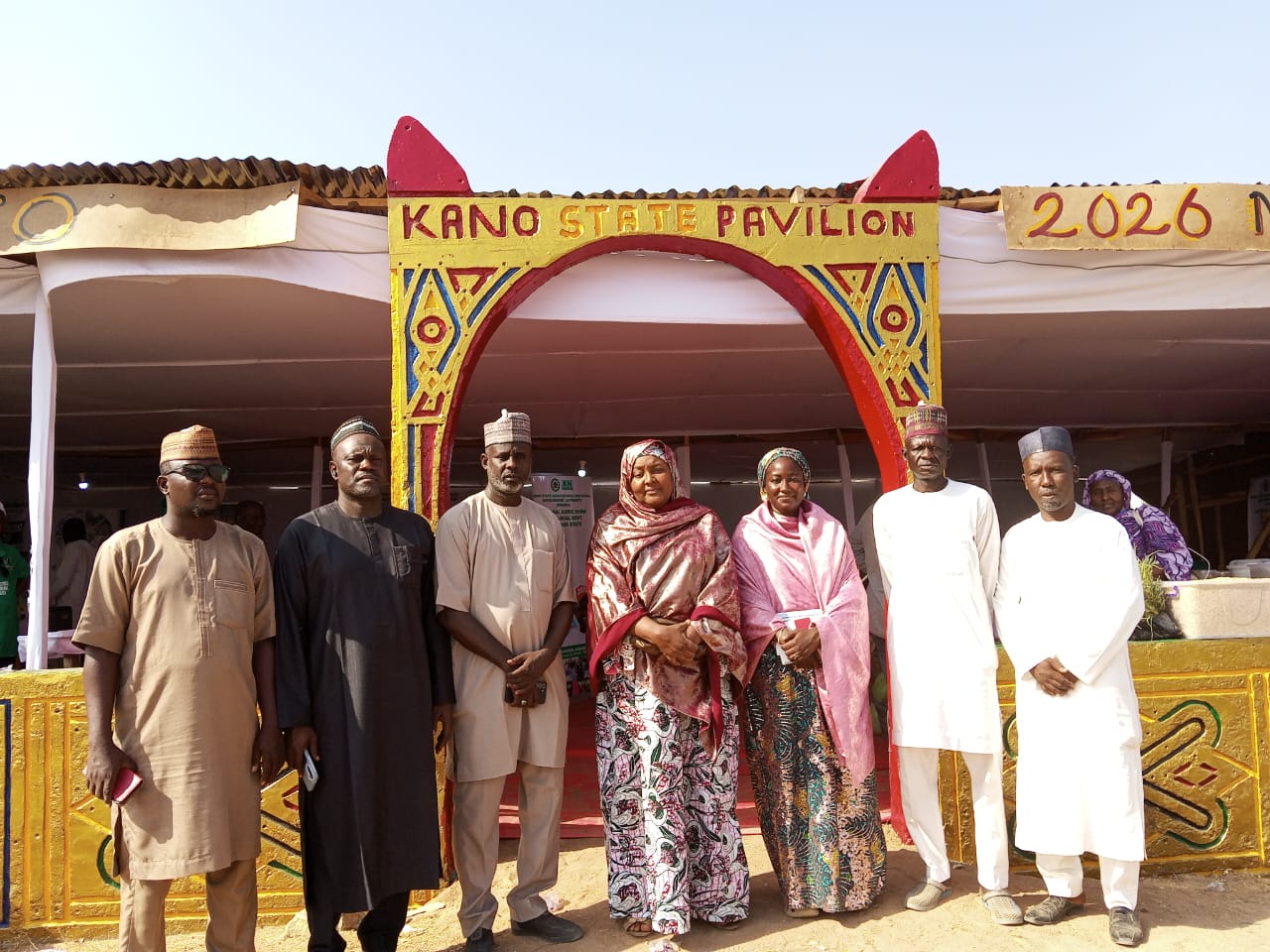
Kano State’s novel agricultural innovations, targets export markets at 2026 National Agric Show

By Samuel Torlumun
The Kano State Government has showcased a range of agricultural innovations, improved farm produce processing initiatives and renewable energy solutions at the 2026 National Agriculture Show, declaring that its participation this year represents a significant improvement over previous editions
The state government said its latest innovations, particularly in agricultural production, value addition, irrigation development and the application of solar energy to farming, demonstrate its determination to strengthen agricultural productivity, create employment and position Kano as a major agricultural hub in Nigeria
The annual National Agriculture Show, currently holding at Tudun Wada, Karu Local Government Area of Nasarawa State, has attracted participants from the 36 states of the federation, as well as private organisations and other stakeholders in the agricultural sector.
Leading the Kano State delegation, the Permanent Secretary, Kano State Ministry of Agriculture, Haj. Binta Lawal Aliyu, said the state came to this year’s exhibition with a wider range of agricultural products and innovations designed to showcase the potential of its farming communities.
She explained that Kano’s participation went beyond displaying raw agricultural produce to demonstrating efforts to develop the entire agricultural value chain, particularly the processing and commercialisation of farm products.
According to her, the state’s exhibition featured several agricultural commodities, including groundnuts, maize and other produce cultivated across its farming communities.
“We came to the Agric Show this year with new innovations, from agricultural products from the farmland to the value chain. Our products include groundnut, maize, among other products produced from our farmlands,” she said.

On the state’s efforts to strengthen irrigation farming, Aliyu disclosed that the Kano State Government was constructing 11 dams to improve access to water for agricultural production and support year-round farming activities.
She noted that irrigation remained a critical component of Kano’s agricultural development, given the state’s longstanding reputation as one of Nigeria’s major centres of irrigation farming.
The construction of the dams, she explained, was expected to strengthen agricultural production, reduce dependence on seasonal rainfall and provide farmers with more opportunities to cultivate their land throughout the year.
She added that the Ministry of Agriculture was also developing plans to expand the market reach of the state’s agricultural products beyond its immediate geographical boundaries.
According to her, the government intends to promote the export of agricultural products to other markets, thereby increasing their commercial value and creating greater economic opportunities for farmers and processors.
“There is a plan by the Ministry of Agriculture to export our products outside Kano, so that people will know that Kano State is converting its agricultural products into new innovations,” she said.
YOUTHS, WOMEN DRIVE AGRICULTURAL VALUE ADDITION
Beyond agricultural production, Kano State is also placing emphasis on the participation of women and young people in processing and value addition, recognising their potential to create jobs and reduce post-harvest losses.
Speaking on behalf of the Youth and Women Department of the Ministry of Agriculture, Ummulkhayr Al Mustapha Rabiyu, of the Department of Agricultural Services, said the department was actively involved in transforming raw agricultural produce into finished and marketable products.
She explained that the initiative was designed to ensure that agricultural production did not end with harvesting but extended to processing, packaging and marketing.
According to her, adding value to agricultural products would not only improve their marketability but also create employment opportunities for women and youths, particularly those interested in agro-processing enterprises.
“The Youth and Women Department is involved in processing farm produce to add value and create employment. Our focus is to ensure that what is produced on the farm does not end on the farm, but is processed into products that can be sold,” she said.
She maintained that strengthening the participation of women and young people in the agricultural value chain would help expand economic opportunities while encouraging more people to embrace agriculture as a viable business.
The initiative also reflects the growing importance of agro-processing in Nigeria’s agricultural transformation agenda, particularly in addressing the challenge of post-harvest losses and improving the income of smallholder farmers.
SOLAR-POWERED IRRIGATION MACHINE TO REDUCE FARMING COSTS
Another major attraction at the Kano State pavilion was a solar-powered irrigation machine developed by an engineer to provide farmers with an alternative source of energy for their agricultural activities.
The innovation is designed to reduce farmers’ dependence on diesel-powered generators, which have become increasingly expensive to operate because of rising fuel costs.
The engineer behind the invention explained that the machine was developed primarily to reduce farmers’ operational expenditure and make access to essential agricultural equipment and irrigation facilities easier.
He said the innovation would simplify farming activities by providing a more affordable and sustainable energy option, particularly for farmers who depend on irrigation to maintain production during periods of limited rainfall.
“It was invented to reduce the cost of expenditure and to make it easy for farmers to access farm implements,” he explained.
On its potential benefits, the engineer said the solar-powered technology would make farming and other agricultural operations easier, especially in the face of changing climatic conditions.
He noted that the increasing impact of climate change had made it necessary for farmers to embrace alternative technologies that could sustain agricultural production while reducing operating costs.
The innovation is particularly significant for irrigation farmers, who often spend substantial amounts on diesel to power water pumps and other farm equipment.
By harnessing solar energy, the technology offers the possibility of reducing energy costs, improving access to irrigation and encouraging more farmers to adopt climate-smart agricultural practices.
KANO’S AMBITION TO STRENGTHEN ITS AGRICULTURAL ECONOMY
The innovations showcased by Kano State at the 2026 National Agriculture Show underscore the state’s ambition to move beyond conventional agricultural production towards a more integrated and commercially driven agricultural economy.
With its emphasis on improved farm production, irrigation infrastructure, agro-processing, youth and women empowerment, and renewable energy, the state is seeking to strengthen different stages of the agricultural value chain.
The proposed construction of 11 dams is particularly important to the state’s ambition of expanding irrigation farming and reducing the uncertainties associated with dependence on rainfall.
Similarly, the introduction of solar-powered irrigation technology could provide farmers with an alternative to expensive fossil-fuel-powered equipment, while the processing initiatives targeting women and youths could help create employment and increase the value of agricultural commodities.
The proposed expansion of markets for Kano’s agricultural products, including plans to explore export opportunities, also points to the government’s intention to transform agriculture into a stronger source of revenue and economic growth.
However, the success of these initiatives will depend on sustained investment, effective implementation, access to affordable agricultural technologies, farmers’ capacity development and the establishment of reliable markets for locally processed products.
For Kano State, the message at this year’s National Agriculture Show is that agricultural development must go beyond the production of crops to encompass innovation, processing, infrastructure, renewable energy and market expansion.
The state government maintained that its latest interventions and innovations have placed it in a stronger position than previous years, demonstrating its determination to consolidate Kano’s standing as one of Nigeria’s leading agricultural states.
