

By Our Reporter, Lafia
The Nasarawa State Government reiterated the need for stronger inter-agency collaboration among justice sector stakeholders to strengthen the administration of the criminal justice system and improve criminal prosecution in the state.
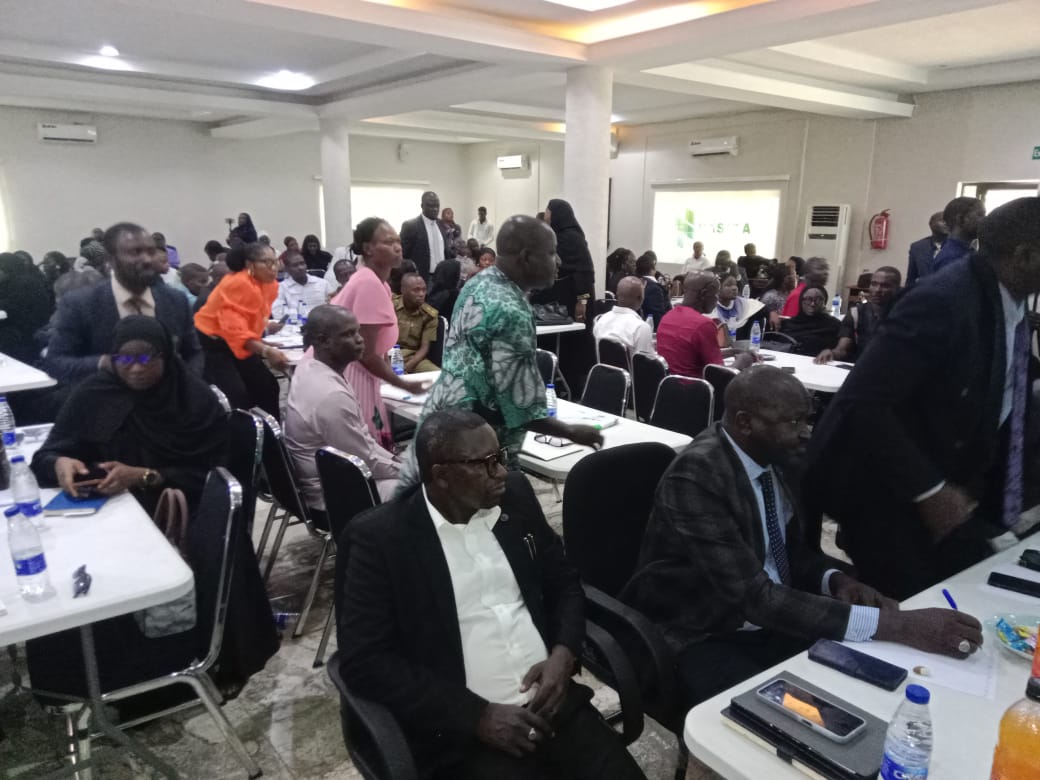
The call was made on Monday in Lafia at a one-day workshop on the practice and procedure for obtaining, tendering and admissibility of confessional statements in criminal trials, organised by the Law Officers Association of Nigeria, Nasarawa State chapter
Declaring the workshop open, the Secretary to the Nasarawa State Government, Dr Labaran Magaji (SAN), said bringing justice line agencies and stakeholders under one roof underscored the inter-agency collaboration that had been lacking in the past.
Magaji noted that the workshop would strengthen justice stakeholders to work towards one goal: sanitising society of criminal tendencies that have been bedevilling the stability of Nasarawa State.
He commended law officers for boldly tackling issues frontally, irrespective of who was involved, and urged them to use forums like the workshop to rub minds and explore trending legal issues.
He urged participants to pay attention to the resource persons and learn trending and emerging legal issues for proper application for the betterment of society.
Magaji described Gov. Abdullahi Sule as a staunch adherent of due process and the rule of law, noting that the administration has maintained a strict stance against any form of political interference in judicial processes.
In his remarks, the Attorney-General and Commissioner for Justice, Isaac Danladi (Esq.), said the event marked a significant milestone in the administration of criminal justice in Nasarawa State.
He said the government has set up a progressive criminal justice system in light of evolving security challenges, adding that effective prosecution requires a coordinated approach from pre-trial, trial and post-trial stages.
He explained that the introduction of the Administration of Criminal Justice Act (ACJA) in 2015 and its domestication by Nasarawa State in 2018 as the Administration of Criminal Justice Law heralded a new dimension in handling confessional statements.
“The ACJA and the Nasarawa State Administration of Criminal Justice Law 2018 have created a binding obligation on the police and other law enforcement agencies to comply with before confessional statements are extracted, tendered and admitted in court,” he said.
He expressed confidence that participants would leave the workshop with a full grasp of the legal requirements for tendering and admissibility of confessional statements.
On her part, the Chief Judge of Nasarawa State, Justice Aisha Usman, represented by Justice Abdullahi Shamma, said the topic was very apt, considering that judges were often challenged when good cases fail because of how confessional statements were obtained.
She noted that a confessional statement makes the prosecution’s case easier, as it clears 90 per cent of the problem, but the key questions remain how it was obtained and how it was admitted.
She said the Evidence Act and the Administration of Criminal Justice Law stipulate that a lawyer must be present when a statement is taken or video recorded.
The Chairman of the Nigerian Bar Association (NBA), Lafia Branch, Dr Abdullahi Gayam, said the police, Nigeria Security and Civil Defence Corps, National Drug Law Enforcement Agency, lawyers and the judiciary were all on trial over complaints about the administration of criminal justice.
He said security agencies complain about the rate at which defendants accused of serious crimes were released, while the judiciary was concerned about how investigations were conducted and cases presented.
“These are genuine concerns from different critical stakeholders. This kind of forum allows us to interact, to address some of these issues,” Gayam said.
The Chairman of the Law Officers Association of Nigeria, Nasarawa State Chapter, Raymond Umoru (Esq.), said the workshop was necessitated by the current trend in prosecution, where 90 per cent of evidence relied upon by prosecutors are confessional statements.
He said many such confessional statements have been thrown out by courts for lack of compliance with the latest developments in the law.
“The recent law is that there are certain constitutional and statutory safeguards that the law has now imposed on security agents to comply with when taking confessional statements,” Umoru said.
He explained that a defendant is entitled to have family members, his lawyer, members of civil society organisations, or any other person of his choice present when his statement is being recorded, or where that is not possible, the statement must be video recorded to protect the defendant’s right and ensure he was not tortured to confess.
Umoru said the workshop, which had one of the largest gatherings of justice sector stakeholders, would improve criminal prosecution in the state, as security agents would get the foundation right and prosecutors would be able to prove compliance in court.
The workshop brought together representatives of the Nigerian Police Force, Department of State Services, National Agency for the Prohibition of Trafficking in Persons, NSCDC, NDLEA, magistrates, lawyers and the judiciary.
