
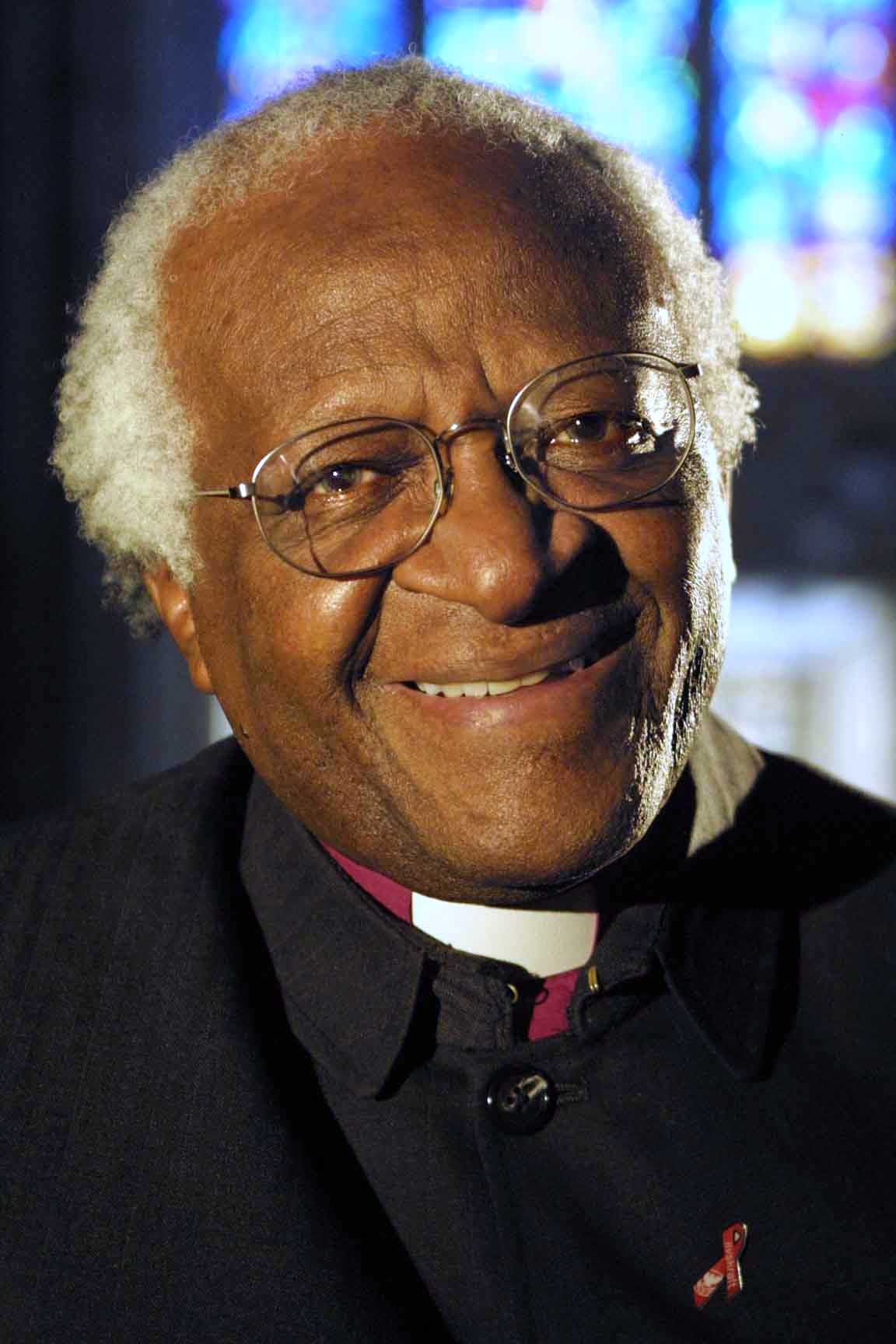

Remembering Archbishop Desmond Tutu on what would have been his 95th birthday
By Pam Ayuba
There are some birthdays we celebrate with cakes, and there are others we mark with conscience. October 7 belongs to the second category.
On this day in 1931, Desmond Mpilo Tutu was born in Klerksdorp, South Africa. Had he lived, he would have turned 95 on October 7, 2026. He died on December 26, 2021, but his death did not silence the moral questions his life posed to South Africa, Africa and the world.
As I remember Archbishop Desmond Tutu today, I find myself asking a disturbing question: If Tutu were alive today, would he recognise the South Africa – and indeed the Africa – for which he fought?
Tutu was more than an Anglican archbishop. He was a moral voice in one of Africa’s darkest chapters. At a time when apartheid sought to organise human beings according to the colour of their skin, Tutu insisted that every human being carried an inviolable dignity.
In 1984, the Nobel Committee awarded him the Nobel Peace Prize for his role as a unifying leader in the non-violent struggle against apartheid. His vision was a democratic and just society without racial divisions.
What distinguished Tutu was not simply his opposition to apartheid, but the manner in which he opposed it. He confronted injustice without surrendering to hatred. He demanded justice without abandoning reconciliation. He understood that defeating an unjust system was only part of the battle; the greater challenge was to prevent the wounds of oppression from becoming permanent wounds of the human soul.
That is why his legacy matters so much today.
THE UNCOMFORTABLE QUESTION OF XENOPHOBIA
South Africa has travelled a remarkable distance since the days of apartheid. Yet the emergence and persistence of xenophobic hostility towards African migrants presents a painful contradiction.
It is difficult not to ask: How can a continent that once demanded that the world recognise the humanity of Black South Africans now witness Africans turning against fellow Africans because of nationality?
There are legitimate questions surrounding migration, border control, employment, crime, public services and national security. Governments have a responsibility to regulate immigration and protect their citizens. But legitimate immigration policy must never become an excuse for collective hatred, intimidation or violence against foreigners.
This is where Tutu’s legacy becomes uncomfortable – and necessary.
The philosophy of Ubuntu, so deeply associated with South African thought, reminds us that our humanity is interconnected. The injury of one human being diminishes the moral fabric of the community.
A Nigerian migrant in Johannesburg is not less African because he crossed a national boundary. A Zimbabwean working in South Africa is not an enemy because of his nationality. A Malawian, Mozambican, Congolese or Ghanaian does not cease to be a human being at the border.
Africa cannot preach Pan-Africanism in diplomatic conferences and practise xenophobia on its streets.
WHAT MIGHT TUTU SAY TODAY?
Of course, Tutu is no longer here to answer that question. We should therefore not put words into his mouth.
But we know the principles that guided him.
I believe he would challenge South Africans – and indeed all Africans – to examine the contradiction between fighting one form of dehumanisation and tolerating another.
He might ask:
Did we defeat apartheid only to learn new ways of excluding one another?
He would probably remind Africa that patriotism does not require hatred of the foreigner, and that legitimate concern about migration does not justify collective punishment.
And he would challenge African leaders to address the economic and social conditions that produce frustration rather than turning migrants into convenient scapegoats.
Tutu’s Nobel recognition was grounded in his commitment to a peaceful struggle for truth, freedom and justice. His approach sought to awaken conscience rather than surrender to hatred.
That lesson remains profoundly relevant.
A MESSAGE TO AFRICAN LEADERS
For me, perhaps the greatest lesson of Tutu’s life is that leadership is ultimately a moral enterprise.
Africa does not merely need leaders who can win elections, control institutions or command political structures. We need leaders who can heal societies.
We need leaders who understand that ethnic, religious and national differences are not political weapons.
We need leaders who can confront poverty without manufacturing enemies.
We need leaders who can enforce immigration laws without dehumanising immigrants.
We need leaders who understand that the strength of a nation is not measured only by its economy or military power, but also by how it treats the vulnerable and the stranger.
Tutu’s life also challenges the Church. The Church must not become so preoccupied with heaven that it becomes silent about injustice on earth. Tutu demonstrated that the Christian faith can be deeply spiritual and simultaneously prophetic.
He preached Christ, but he also confronted apartheid.
He preached forgiveness, but he did not ignore injustice.
He preached reconciliation, but he insisted on truth.
That is Christian leadership with a public conscience.
TUTU’S UNFINISHED ASSIGNMENT
Perhaps this is why remembering Desmond Tutu in 2026 should not be an exercise in nostalgia.
It should be an examination of ourselves.
What would he say about an Africa still divided by ethnicity, nationality, religion and political patronage?
What would he say about leaders who exploit these divisions for political advantage?
What would he say about citizens who tolerate injustice when the victim belongs to another tribe or nationality?
And what would he say to those of us who speak passionately about African unity but remain suspicious of Africans from neighbouring countries?
I suspect his answer would be simple but demanding:
Human dignity must come before nationality.
Justice must come before political convenience.
Reconciliation must come before revenge.
And humanity must come before borders.
REMEMBERING THE MAN, EMBRACING THE LESSON
Archbishop Desmond Tutu belonged to South Africa, but his moral inheritance belongs to Africa.
He taught that courage does not have to wear the face of violence. He showed that one can confront power without becoming consumed by hatred. He demonstrated that reconciliation is not weakness and that forgiveness does not mean pretending that injustice never happened.
His generation confronted apartheid.
Our generation must confront the many new forms of division threatening Africa.
Xenophobia is one of them.
Tribalism is another.
Religious intolerance, political exclusion, corruption, ethnic mobilisation and the dehumanisation of the poor are others.
The challenge before us is therefore not simply to remember Tutu, but to continue the work of moral transformation to which his life pointed.
On what would have been his 95th birthday, I honour Archbishop Desmond Mpilo Tutu – not merely as a Nobel laureate or a former archbishop, but as a conscience of Africa.
His voice may have fallen silent.
But the question remains before us:
Can Africa build the just, reconciled and humane society that Tutu spent his life imagining – or will we become strangers to one another on the continent we call home?
That, perhaps, is the real tribute we owe him.
Not merely to remember Tutu, but to become the kind of Africans whose actions would have made his struggle worthwhile.
Ayuba, a journalist, peace ambassador and public affairs analyst, writes from Jos.
