
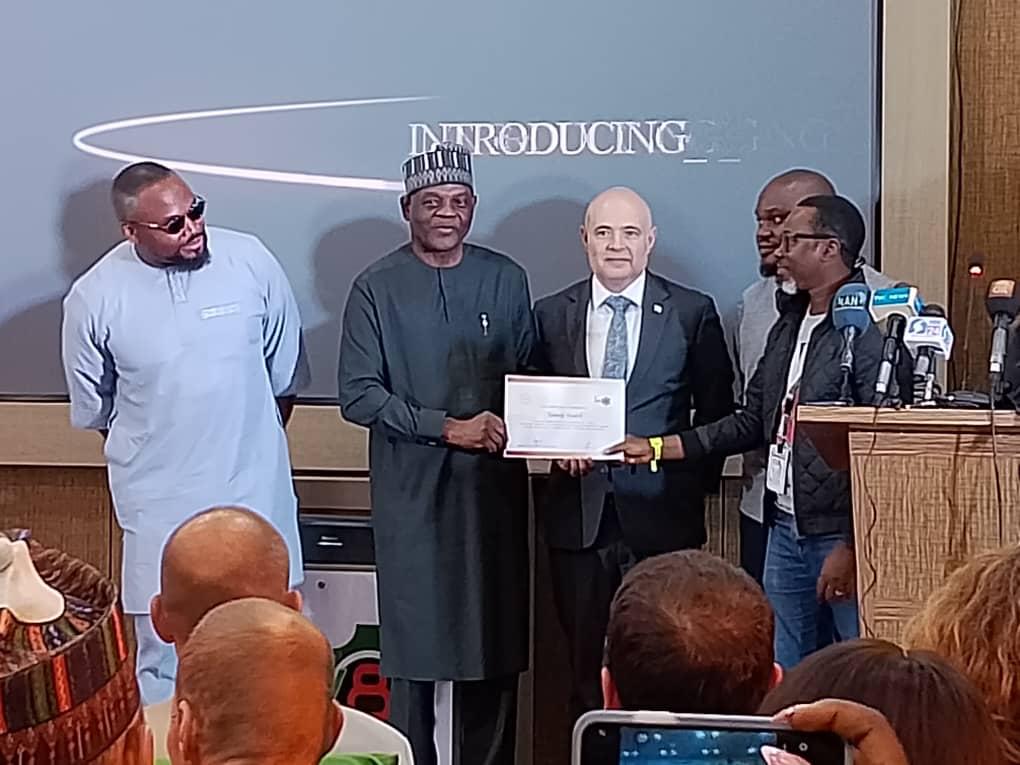
Israel, TETFund move to end Nigeria’s ‘research graveyard,’ launch fresh drive to turn campus ideas into billion- naira businesses

In a bold move aimed at tackling one of Nigeria’s biggest development challenges—the failure to commercialise research—the Federal Government, through the Tertiary Education Trust Fund (TETFund), has partnered with Israel to inject fresh funding, mentorship and global expertise into transforming university inventions into thriving businesses.
The renewed commitment was unveiled on Friday in Abuja as Israel announced funding for the fifth edition of the Innovation Fellowship for Aspiring Inventors and Researchers (iFAIR 5), even as TETFund disclosed an ambitious nationwide programme to establish innovation centres in more than 60 tertiary institutions to ensure research breakthroughs no longer remain confined to academic shelves.
The initiative comes amid growing concerns that thousands of research findings produced annually by Nigerian universities rarely progress beyond dissertations and journal publications, depriving the country of innovations capable of creating industries, jobs and wealth.
Speaking during the iFAIR Cohort 4 Closing Ceremony and Innovation Showcase Challenge, TETFund Executive Secretary, Sonny Echono, said the country’s greatest innovation challenge is not a shortage of ideas but the inability to convert research into commercially viable products.
“The main problem we are solving is how to commercialise university research results and inventions, bridging the gap between academia, government and the productive industrial sector,” Echono declared.
To reverse that trend, he announced that TETFund is investing heavily in innovation infrastructure across Nigerian campuses.
“As I speak, TETFund is providing facilities and establishing innovation centres across over 60 tertiary institutions so that students, while still in school, can find solutions to global and national challenges,” he said.
The centres are expected to serve as incubation hubs where students, researchers and young inventors can refine ideas, access engineering support, attract investors and develop products capable of competing in local and international markets.
The announcement coincided with Israel’s confirmation that funding has been secured for the next phase of iFAIR, a programme that has become one of the country’s leading innovation accelerators.
Outgoing Israeli Ambassador to Nigeria, Michael Freeman, described the fellowship as a practical demonstration of Israel’s commitment to helping Nigeria build indigenous technology rather than depend on imported solutions.
“I am so proud to stand here today and announce that we have secured with our partners funding for iFAIR 5, and iFAIR 5 will be launching in October 2026,” Freeman said.
He emphasised that the partnership deliberately focuses on empowering Nigerian innovators to solve Nigerian problems.
“This programme has never been about bringing Israeli solutions to Nigeria. It’s been about helping brilliant Nigerian innovators develop Nigerian solutions to Nigerian challenges supported by Israeli experience, mentorship and innovation,” he said.
According to Freeman, the fellowship has successfully brought together researchers, entrepreneurs, investors, engineers and government institutions to transform innovative ideas into businesses capable of generating employment and stimulating economic growth.
Innovation experts at the event warned that unless Nigeria accelerates technology development and embraces Artificial Intelligence, it risks losing competitiveness in the global economy.
Technology entrepreneur and Andela co-founder, Iyinoluwa Aboyeji, said Nigeria’s youthful population could become a liability rather than an advantage if productivity remains low.
“What I appreciate about Israel’s partnership here is that it focuses on technology transfer, teaching us how to build the technologies ourselves,” he said.
He warned that AI is rapidly redefining global productivity and countries that fail to adapt could face prolonged economic decline.
“Nigeria has a median age of 17.6 years. We are dealing with a critical question of national productivity, especially in the age of Artificial Intelligence. If Nigeria falls behind in productivity and AI, we risk falling into decades of economic stagnation.”
The event showcased dozens of prototypes developed by young Nigerian innovators in agriculture, healthcare, renewable energy and community development, many of them designed to address pressing local challenges through affordable technology.
Head of Programmes at Innov8 Hub, Tolulope Aina, said the innovations represented only the beginning of a journey towards commercial success.
“The finished prototypes you see today are only the start. You must carry these products across the finish line into the commercial market,” she charged the graduating fellows.
Officials of Innov8 Hub also highlighted the organisation’s growing role in Nigeria’s innovation ecosystem, revealing that it has supported more than 3,000 innovators, researchers and entrepreneurs while helping to locally manufacture over 10,000 face shields during the COVID-19 pandemic.
The renewed Nigeria-Israel partnership is expected to deepen technology transfer, expand mentorship opportunities and attract greater investment into research commercialisation, positioning innovation as a key driver of economic diversification beyond oil.
For Nigeria’s universities, the message was unmistakable: the era of groundbreaking research ending as forgotten academic papers is expected to give way to a new focus on startups, patents, manufacturing and globally competitive enterprises.
