

By Michael Onazi
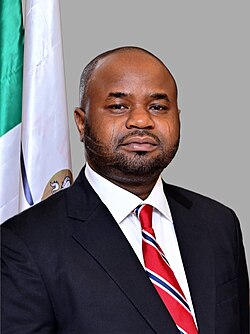
Taxation is often seen as money taken from the people by government. But there is another way to look at it. When taxes are properly collected and judiciously used, they give government the resources it needs to provide roads, schools, hospitals, security and other services that improve people’s lives. This is at the heart of the economic reforms of President Bola Ahmed Tinubu and the work of Dr. Zacch Adedeji, the Executive Chairman of the Nigeria Revenue Service (NRS).
Dr. Adedeji believes that taxation should not make life harder for Nigerians. Rather, it should support a growing economy. His simple message is that government should tax for prosperity, not poverty. In other words, when businesses grow, people earn more and more Nigerians become economically active, government revenue will also increase.
This approach is important because Nigeria needs more money to run the government and provide basic services. For many years, the country has been depending too much on oil revenue and borrowing. This makes it difficult for the government to meet its responsibilities when oil earnings fall or government spending increases. The Tinubu administration has therefore made improving domestic revenue one of the major parts of its economic reforms.
The reforms have not been easy. The removal of fuel subsidy, changes in the foreign exchange system and tax reforms have affected Nigerians in different ways. But the main argument of the administration is that the country cannot continue with a system that puts too much pressure on government finances. The goal is to build an economy that can support itself and provide the resources needed for development.
This is where Dr. Adedeji’s role becomes important. Since taking charge of the Nigeria Revenue Service (NRS), he has focused on making Nigeria’s tax system more modern, simple and effective. The idea is not just to collect more money from the people and businesses already paying taxes. It is also to bring more economic activities into the tax system and make the process easier for taxpayers.
For years, businesses and individuals complained about multiple taxes, overlapping demands from government agencies and difficult tax procedures. These problems made doing business more difficult. The reforms under Adedeji are aimed at improving digital services, making the system more transparent and reducing unnecessary burdens on taxpayers.
The thinking behind this is simple. Government cannot build a strong economy by putting more pressure on the same taxpayers every year. It must create an environment where businesses can grow and new businesses can emerge. When more businesses succeed, more people get jobs, incomes increase and government revenue grows.
Interestingly, the figures from the Nigeria Revenue Service show that revenue collection has improved. The service collected N28.3 trillion in 2025, above its target of N25.2 trillion. For 2026, it has set a target of N40.7 trillion. These figures are important because stronger revenue gives government more money to provide services and reduce its dependence on borrowing.
But the real importance of these taxed is not the huge numbers. What matters is the government performance with the huge revenue. This should help the country to build roads, improve healthcare and education, strengthen security, support infrastructure and create an environment where businesses can employ more people. That is where ordinary Nigerians would eventually feel the impact of better revenue collection.
Dr. Adedeji understands that businesses need to survive if the government wants to keep collecting taxes. A business that is struggling cannot employ more workers or pay more taxes. That is why a good tax system must encourage businesses to grow instead of making it harder for them to operate. This is one of the reasons the reforms focus on improving the tax system rather than simply increasing the burden on existing taxpayers.
The wider economic reforms of the Tinubu administration follow the same direction. The government wants Nigeria to depend less on oil and borrowing and rely more on productive businesses, investment and domestic revenue. This is a major change and, like every major economic change, it comes with difficulties. But the long term aim is to create a stronger economy that can provide opportunities for more Nigerians.
The removal of fuel subsidy is also part of this difficult reform process. Subsidy had become too expensive to maintain. Subsidy removal has created more resources for government, although it has also increased the cost of living for many Nigerians in the short term. But already, savings from the removal of fuel subsidy are been used to improve the economy, improve infrastructure and provide better opportunities for the citizens.
Dr. Adedeji’s background has prepared him for the responsibility he now carries. He studied Accounting at Obafemi Awolowo University, where he earned a first-class degree, and later obtained further qualifications in accounting and economic development. He also worked in the private sector before holding important public positions, including Commissioner for Finance in Oyo State and Executive Secretary of the National Sugar Development Council.
His experience has given him an understanding of both government finances and the challenges businesses face. As the revenue chairman, he has brought that experience into the effort to improve Nigeria’s tax administration. His work has also shown that economic reforms need people who can turn government policies into practical results.
President Tinubu’s recent public commendation of Adedeji is also significant. It shows that the administration sees strong revenue management as an important part of its economic programme. It also recognises the role of competent officials in carrying out difficult reforms. A President may announce policies, but those policies can only succeed when capable hands are available to implement them.
More revenue is useful only when it helps government provide better services, support development and create opportunities. The common man should be able to see a connection between what he contributes and the services he receives. That is the real promise of a tax system built around prosperity rather than poverty.
This is why the work of Zacch Adedeji deserves commendation. His approach presents taxation not simply as money the government takes from citizens, but as a means of building the resources needed to improve society. If businesses grow, workers earn more, the government collects more and public services improve, everyone benefits. That is the simple idea behind a revenue system that puts the welfare of the common man at the centre
Onazi writes from the National Assembly, Abuja.
